|
1
|
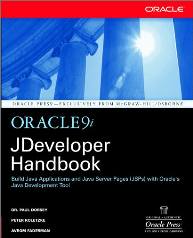
- Dr. Paul Dorsey
- Dulcian, Inc.
|
|
2
|
- Fusion technology stack is large and complex.
- Hard to make the transition into the J2EE environment.
- Host of different tools, programming languages, architectures, and
technologies
- Projects often have the illusion of progress.
- Building functioning, scalable production software often becomes an
impossible task.
|
|
3
|
- Culture?
- Lack of knowledge?
- Clinical pathology?
|
|
4
|
- Definition:
- An irrational avoidance of frameworks (particularly non-open source)
- Diagnostic Indications:
- Desire to build everything him/herself
- “If I don’t build it, it must stink.”
- “If Oracle built it, it must really stink.”
- Irrational avoidance of Application Development Framework – Business
Components (ADF BC)
- Symptoms:
- Higher than expected project cost
- Project failure
- Treatment
- No known cure
- Some success with short leashes and large bats
- Related conditions
- Megalomania
- Paranoid delusions
|
|
5
|
- Definition:
- An aversion to placing any logic in the database
- Diagnostic Indications:
- “We should be database-independent.”
- “Databases are old fashioned. Everyone is coding this way.”
- Symptoms:
- Twice as much code as is necessary
- Performance is 10 times slower.
- Network traffic is 100 times as great.
- Four times the load on the database server
- Three times the development time
|
|
6
|
- Definition:
- Irrational desire to refactor small systems to use web services and
BPEL
- Diagnostic Indications:
- Ownership of 72 BPEL books
- Desire to use BPEL for data-centric processes
|
|
7
|
- First-rate Service Oriented Architecture (SOA)-centric environment.
- Built from an OO developer’s perspective:
- Lacks much of the vision that would make Designer users comfortable
- “Not-so-subtle” encouragement to place business rules enforcement in
the middle tier, coded as Java
- Can be used to articulate data-centric complex business processes,
using portions of the architecture
- Business Process Execution Language (BPEL)
- Can lead to applications with poor performance because of the number
of round trips needed between the middle tier and the database.
|
|
8
|
- Micro-Service-Oriented-Architecture (M-SOA) approach
- Division between the database and user interface (UI) portions.
- Two key features involved in "thick database thinking":
- Nothing in the UI ever directly interacts with a database table. All
interaction is accomplished through database views or APIs.
- Nearly all application behavior (including screen navigation) is
handled in the database.
- Thick database does not simply mean stuffing everything into the
database and hoping for the best.
|
|
9
|
- Creating a thick database makes your application UI
technology-independent.
- Creates reusable, UI technology-independent views and APIs.
- Reduces the complexity of UI development.
- Database provides needed objects.
- Reduces the burden on the UI developer
|
|
10
|
- Database
- Oracle will add features.
- DBMS will not internally refactor.
- Existing stack “works.”
- Huge DBA learning curve
- Huge cost of switching
- UI Technology Stack
- Java EE or .Net?
- All environments change
- Every year BRIM® has been rebuilt.
|
|
11
|
- Minimizes development risk
- Helps build working applications that scale well.
|
|
12
|
- Improved overall throughput
- Caused by combined effect of:
- Fewer roundtrips
- Less network traffic
- Better database access
- Test: Average improvement in performance?
- a) 10%
- b) 100%
- c) 10x
- d) 100x
- e) 500x
|
|
13
|
- Requires many fewer round trips from the application server to the
database.
- Each screen should be 1-3 round trips
- Test: OO developers can write screens that require this many database
round trips:
- a) dozens
- b) hundreds
- c) thousands
- d) millions
|
|
14
|
- Less PL/SQL code is needed to perform data centric operations than Java.
- PL/SQL has more data tricks.
- Database-intensive code will always be more efficiently written in the
database.
- Test: Average reduction in the amount of code needed is:
- a) 10%
- b) 25%
- c) 50%
- d) 90%
|
|
15
|
- Less code means less coding time.
- Simpler architecture
- Separate user interface and logic
- Building two smaller applications is easier than building one large
one.
- UI is trivial.
- Can be shown to users right away.
- Faster feedback to the development team
- Helps to identify design errors much earlier in the process
- Test: Using a thick database approach can reduce development time by
- a) 10%
- b) 33%
- c) 50%
- d) 66%
|
|
16
|
- Application being built is divided into two parts
- Each has less code to maintain.
- Application is clearly partitioned.
- When a business rule changes, only need to look through half of the
code to find it.
- As the number of lines of code in an application doubles, the complexity
increases by a factor of four.
|
|
17
|
- UI technology stack changes are common.
- .Net Java EE battle rages on.
- Web architecture is more volatile than the database platform.
- Defense against the chaos of a rapidly evolving standard
- Test: What is the probability that your web UI standards will be the
same in 18 months?
|
|
18
|
- With minimal additional training, skilled SQL and PL/SQL developers can
help build web applications with no web skills whatsoever.
- If sophisticated UI developers are available, they can focus on
delivering very high quality user interfaces.
|
|
19
|
- Two portions of an application can be coded independently
- Teams can work in isolation until substantive portions are working.
- First version of the UI is built within a few days
- Use as testing environment for the database team
- Feedback can be received from users.
- Use Agile process
- Minimal design work done to produce a partially working system.
- Additional functionality created in an iterative design process.
|
|
20
|
- Design the application.
- Screens are designed on paper.
- White boards are used for page flows.
- Real screen mock-ups are usually a waste of time.
- A careful diagram on a piece of paper suffices for the initial UI
design.
- MS Access is also good.
|
|
21
|
- Once the UI design is complete, determine:
- What views are required
- APIs that will be called
|
|
22
|
- Stub out the code for the views and APIs.
- select <values> from dual
- APIs = functions that return a correct value (usually hard-coded).
- Interfaces will change as the application matures.
|
|
23
|
- UI and database development take place at the same time.
- UI team takes the APIs and incorporates them into the application.
- Database team makes them work.
|
|
24
|
- What would happen if 100% of all UI logic were placed in the database?
- Tabbing out of a field
- LOV populated from database
- Page navigation
- Pathologically complete way to implement the thick database approach.
- A system built this way would be sub-optimal.
|
|
25
|
- Can a skilled team successfully build applications that are 100%
database “thin”?
- Requires a highly skilled team.
- Minimize round trips
- ANY middle tier technology (e.g. BPEL) can also be a performance
killer.
- Possible but difficult
|
|
26
|
- Client/server development was inherently stateful.
- Counted on user sessions being persistent.
- Used persistent global variables
- Assumed that transactions were only being committed to the database on
demand.
- Web development usually needs to be stateless.
- Reusable set of sessions in a session pool
- Database developers tend to strongly resist moving into a stateless
environment.
- Stateful coding techniques are very hard to give up.
- Developers must abandon a stateful development style in order to
successfully build web applications.
|
|
27
|
- Server-side
- Create a table and persist all global info
- Persistent lock rows (lock_id column)
- Pass session ID on each call
- Worry about abandoned sessions
- Best approach – but requires more work
- Middle tier
- Can’t be done unless you are only using 1 application server
- Usually persists to the database
- Client
- Cookies
- Pass context to database each time
|
|
28
|
- Functions can return object collections.
- An object collection can be cast to a table.
- Object collections types are supported in SQL.
- The idea:
- Build a view over the function to hide complex procedural logic.
|
|
29
|
- type lov_oty is object (id, display_tx);
- type lov_nt is table of lov_oty;
- function f_getLov_nt
- (i_table_tx,i_id_tx,i_display_tx,i_order_tx)
- return lov_nt is
- v_out_nt lov_nt := lov_nt();
- begin
- execute immediate
- 'select lov_oty('
-
|i_id_tx||','||i_display_tx||')'||
- ' from '||i_table_tx||
- ' order by '||i_order_tx
- bulk collect into v_out_nt;
- return v_out_nt;
- end;
|
|
30
|
- Generic value list query for any UI:
- Uses bind variables – no significant performance impact
- Completely dynamic – any new fields/tables/etc.
- select id_nr, display_tx
- from table(
- cast(f_getLov_nt
- ('emp',
- 'empno',
-
'ename||''-''||job',
- 'ename')
- as lov_nt)
- )
|
|
31
|
- Views placed on top of dynamic functions:
- Completely hide the logic from the UI
- INSTEAD-OF triggers make logic bi-directional.
- Minor problem – There is still no way of passing parameters into the
view other than by using some type of global.
- Create or replace view v_generic_lov as
- select id_nr, display_tx
- from table( cast(f_getLov_nt
- (GV_pkg.f_getCurTable,
- GV_pkg.f_getPK(GV_pkg.f_getCurTable),
- GV_pkg.f_getDSP(GV_pkg.f_getCurTable),
- GV_pkg.f_getSORT(GV_pkg.f_getCurTable))
- as lov_nt)
- )
|
|
32
|
- The idea:
- Convert relational data into something that will make user interface
development easier
- The solution:
- Use a view with a set of INSTEAD-OF triggers
|
|
33
|
- create or replace view v_customer
- as
- select c.cust_id,
- c.name_tx,
- a.addr_id,
- a.street_tx,
- a.state_cd,
- a.postal_cd
- from customer c
- left outer join address a
- on c.cust_id = a.cust_id
|
|
34
|
- create or replace trigger v_customer_ii
- instead of insert on v_customer
- declare
- v_cust_id
customer.cust_id%rowtype;
- begin
- if :new.name_tx is not null then
- insert into customer
(cust_id,name_tx)
-
values(object_seq.nextval, :new.name_tx)
- returning cust_id into
v_cust_id;
- if :new.street_tx is not null
then
- insert into address
(addr_id,street_tx,
- state_cd, postal_cd,
cust_id)
- values
(object_seq.nextval,:new.street_tx,
- :new.state_cd,:new.postal_cd,
v_cust_id);
- end if;
- end;
|
|
35
|
- create or replace trigger v_customer_id
- instead of delete on v_customer
- begin
- delete from address
- where cust_id=:old.cust_id;
- delete from customer
- where cust_id=:old.cust_id;
- end;
|
|
36
|
- create or replace trigger v_customer_iu
- instead of update on v_customer
- begin
- update customer set name_tx = :new.name_tx
- where cust_id = :old.cust_id;
- if :old.addr_id is not null
- and :new.street_tx is null then
- delete from address where
addr_id=:old.addr_id;
- elsif :old.addr_id is null
- and :new.street_tx is not null
then
- insert into address(…) values
(…);
- else
- update address set… where
addr_id=:old.addr_id;
- end if;
- end;
|
|
37
|
|
|
38
|
- Calculate and distribute sales goals to a sales force.
- Algorithm driven by parameters for each salesperson and region stored
in the database.
- User interface built in Java
- All calculations were done in Java.
- Routine consisted of 40 classes, about 10,000 lines of code, and
required six weeks to write.
- Most significant performance problems were due to poorly coded SQL.
- Significant changes to the algorithm were required,
- Discard existing Java and rewrite it as a database-side routine.
|
|
39
|
- Batch routine
- Sales goaling
|
|
40
|
- Trying to support a complex tree navigation structure
- Followed conventional wisdom to the letter.
- Everything was placed in the middle tier.
- All queries were stored on the application server
- No code was placed in the database.
- Queries spun off child queries which in turn spun off other child
queries (7 levels deep), and a single tree refresh took 12 minutes.
- Since then, the tree control has been rewritten a few times.
- Each time more and more logic was moved into the database.
- Views that flattened the hierarchical database structure were created.
- UI design was refactored.
- Tree refresh executes with sub-second response.
|
|
41
|
- Sophisticated tree written in Java using conventional wisdom.
- Virtually no code in the database
- Performance was poor (mainly because of excessive round trips and
unnecessary full tree refreshes)
- 12,000 lines of code spread across 50 classes making the code difficult
to modify
- Using a complete thick database approach
- Design refactored so that all tree display logic was stored in the
database
- The tree is sent by the database to the user interface as an XML file.
- Modifications to the tree are also sent as small XML files that
indicate tree-node refresh commands.
|
|
42
|
|
|
43
|
- 1. Internal Modification Request Tracker:
- Built using conventional approach by an experienced Java team.
- Earlier version built by offshore, inadequately skilled development
team.
- To create a working version of the system took about 6 months – flawed
architecture
- 2. Complex order entry system
- Built using the “thick database” approach by a team with equivalent
experience.
- Thick database approach was used from the start
- All navigation supported using a tree on the left hand side of the
screen.
- Tree itself is built into the database.
- All navigation logic is handled in the database.
|
|
44
|
|
|
45
|
- Moving code from the middle tier to the database had the following
benefits:
- Reduced the total amount of code
- Reduced development time
- Improved performance
- Reduced network traffic
- Reduced the complexity of the application
- Thick database approach is a viable alternative to the conventional
wisdom of reducing reliance on the database.
- Leverages existing database talent
- Can result in dramatic improvements in performance
|
|
46
|
- Submit articles, questions, … to
- IOUG – The SELECT Journal
ODTUG – Technical Journal
- select@ioug.org
pubs@odtug.com
- Reviewers needed
|
|
47
|
- Full business rules-based development environment
- For Demo
- Write “BRIM” on business card
- Includes:
- Working Use Case system
- “Application” and “Validation Rules” Engines
|
|
48
|
- Dr. Paul Dorsey – paul_dorsey@dulcian.com
- Dulcian website - www.dulcian.com
|

 Notes
Notes